

As the AI race intensifies, the enterprises gaining a competitive advantage are those mastering AI inference, the process of running AI models efficiently and reliably in production. Success is determined by how many users, agents, and workloads your AI infrastructure can serve without sacrificing performance or driving up costs.
TL;DR
- Disaggregated inference is an AI-serving architecture that runs the two phases of LLM inference, prefill and decode, on separate specialized hardware instead of one accelerator.
- Prefill is compute-bound and decode is memory-bandwidth-bound, so dedicating different hardware to each phase beats forcing one chip to do both.
- Disaggregated inference scales prefill and decode independently, raising hardware utilization, lowering latency, and serving more workloads from the same infrastructure.
- Disaggregated inference matters because agentic AI creates unpredictable, high-volume token demand that monolithic architectures cannot serve efficiently.
- SambaNova delivers disaggregated inference by pairing GPUs for prefill with RDUs for decode, independently measured by Artificial Analysis at up to 2x the speed of GPU-only setups.
Disaggregated inference is an emerging architecture that enables organizations to serve more AI workloads from the same infrastructure footprint. It has emerged as a foundational architecture for large-scale AI serving because the nature of inference workloads has fundamentally changed.
This article explains what disaggregated inference is, why it matters, how it works, and how to bring it to your AI datacenter.
Traditional AI Inference Challenges
During inference, an AI model or large language model (LLM) computes and generates tokens, which are the words or parts of words that AI models use to understand and generate language. Tokens represent the primary workload of AI infrastructure. The rise of agentic AI has dramatically increased both the type and volume of AI workloads.
Changing Demands of Agentic Workloads
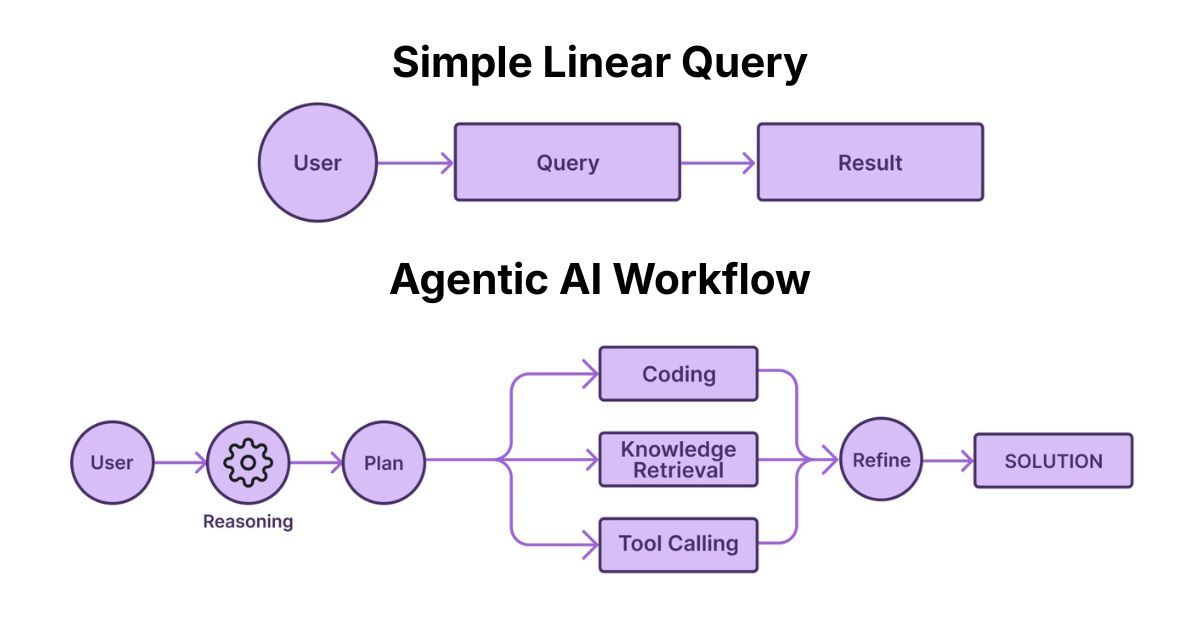
AI agents execute multi-step reasoning, invoke external tools, and coordinate with other agents to complete complex business tasks.
Each additional reasoning step generates more tokens, requiring more computation from the underlying hardware.
Agentic workloads create highly dynamic and unpredictable inference patterns.
- Thousands of AI agents can simultaneously invoke reasoning, search, and tool-calling workflows, creating sudden spikes in demand.
- Agents may spend several minutes processing some requests while others finish in seconds.
- Some requests complete with only a few hundred tokens, while others require thousands of tokens.
The Problem with Traditional Inference Architecture
Traditional inference systems treat every request the same. Continually adding more and more GPU chips designed for fast compute does not necessarily accelerate agentic inference like it does for training.
The challenge with inference architectures running prefill and decode the same way is that the two workloads demand different capabilities. Prefill is compute-bound, meaning it processes the full input prompt in parallel and wants to saturate every available FLOP.
Decode is memory-bound, meaning it generates one token at a time, repeatedly reading the model weights and the growing KV cache, and its bottleneck is memory bandwidth, not raw compute. When both run on the same stack, they compete for the same resources at the same time, and neither workload gets what it needs.
The practical effect is throughput loss on every machine in the fleet. Every time a decode request lands on a chip that's in the middle of prefilling, the prefill step stalls waiting for compute, and the token-by-token cadence that agentic workloads depend on breaks.
Run enough concurrent requests, as any production system must, and the collisions keep happening: Decode batches interrupting prefill batches; prefill threads starving during decode bursts. The chip is technically busy the whole time, but it's busy in a way that produces fewer tokens per second (tok/s) than either workload could achieve on its own.
As a result, the infrastructure is underutilized during some phases while creating bottlenecks during others, which ultimately prevents consistent AI performance at scale.
This is the core limitation of traditional inference architectures: It treats prefill and decode as one job when they are really two, with different resource profiles and different optimization targets.
Bundling the workloads doesn't just create occasional contention, it structurally caps throughput, because the system can never fully tune for either phase without compromising the other.
As agentic loops multiply the number of decode cycles per task, that compromise gets more expensive with every iteration, which is why disaggregated inference separates the two stages on stacks optimized for the workload type is ideal for AI inference architecture.
Operational Challenges
Organizations frequently respond by adding more infrastructure to maintain service levels. However, power consumption, cooling capacity, and rack density are also critical constraints for enterprise AI infrastructure.
Simply adding more hardware to increase inference capacity is becoming economically and operationally unsustainable. It increases costs without proportionally improving performance.
Why Disaggregated Inference Has Become Central to Large-Scale AI Serving
Modern enterprise AI platforms must simultaneously support conversational assistants, coding copilots, document processing, reasoning models, retrieval-augmented generation (RAG), and autonomous AI agents. These applications generate highly variable requests with vastly different prompt lengths, reasoning depths, and response sizes.
A one-size-fits-all inference architecture can no longer efficiently serve these workloads. At the same time, AI infrastructure has become one of the largest capital investments for organizations deploying foundation models at scale. Simply adding more infrastructure to accommodate growing demand is both economically inefficient and operationally difficult.
Disaggregated inference addresses both challenges and is rapidly becoming a prerequisite for delivering enterprise AI at scale rather than an optional optimization.
Defining Disaggregated Inference
Disaggregated inference is an AI-serving architecture that separates different workloads of the inference process onto independent pools of infrastructure. This means that prefill and decode are separated into two hardware stacks, rather than running both workloads on the same AI accelerator, such as GPUs and RDUs.
By assigning each workload to the optimal stack, it can be provisioned, batched, and scaled independently, instead of forcing one chip to context-switch between two workloads that want opposite things.
Most disaggregated inference has been implemented on GPUs, using frameworks like vLLM and NVIDIA Dynamo to coordinate separate prefill and decode pools. That's a meaningful step beyond the one-chip model, but it stops short of matching hardware capability to workload.
Instead of forcing a single accelerator to execute every stage of every request, disaggregated inference routes the workloads to the hardware optimized for the computational profile of its phase, and connected with a fast handoff mechanism for KV cache between stages.
This explains why adding more GPUs doesn't scale agentic inference the way it scales training. Training is compute-bound throughout, so more identical chips means more throughput. Agentic inference alternates between compute-bound prefill and memory-bound decode, so piling on more of the same chip just multiplies the mismatch instead of resolving it.
The Two Phases Disaggregation Separates
Although inference appears to users as a single request and response, every interaction with an LLM consists of two fundamentally different processing phases: prefill and decode. Each phase has very different demands on AI hardware, making it difficult for a single accelerator to optimize both simultaneously.
Prefill: Why It Is Compute-Bound
The prefill phase occurs when the AI model receives the input or prompt. The model processes every input token in parallel, building an internal representation of the prompt before it can begin generating a response.
Billions of model parameters must be evaluated across all input tokens. Performance during prefill depends primarily on raw processing capability. The larger the prompt, the more computation is required.
Decode: Why It Is Memory-Bandwidth-Bound
Once the prompt has been processed, the model generates the response one token at a time. Unlike prefill, each generated token depends on the one before it, preventing the work from being fully parallelized. The model must also repeatedly access previously generated information stored in memory (KV cache) to maintain context throughout the conversation.
As a result, decode performance is constrained by how quickly the hardware can move data between memory and the processor. Because agentic AI often produces long reasoning chains and extended responses, decoding frequently dominates overall inference time and infrastructure utilization, which is why faster inference matters for these use cases. .
Why Optimizing Both Phases on the Same Hardware Is a Fundamental Trade-Off
Attempting to optimize a single system for both workloads inevitably creates compromises. Hardware that excels during prefill may spend much of the decode phase waiting on memory, while hardware configured for efficient decoding cannot fully exploit its compute resources during prefill.
What Disaggregated Inference Actually Means
Disaggregated inference improves performance by separating these phases and allowing each to run on infrastructure designed for its specific workload. Each phase can then scale independently, allowing organizations to allocate resources where they deliver the greatest performance benefit.
Disaggregation also enables infrastructure to be shared more efficiently across many concurrent inference requests. Compute resources can be dynamically assigned to whichever phase requires them most, improving utilization while reducing latency.
Disaggregated vs. Monolithic Inference: What's the Difference?
Traditional AI inference architecture is also called monolithic because all stages of inference execute together on the same accelerator pool. Here’s how it compares to the more modern disaggregated inference architecture.
How Disaggregated Inference Works in Practice
Rather than treating inference as a single monolithic workload, disaggregated inference architecture routes each stage of the request to the infrastructure best suited to execute it.
Splitting Prefill and Decode Across Heterogeneous Hardware Pools
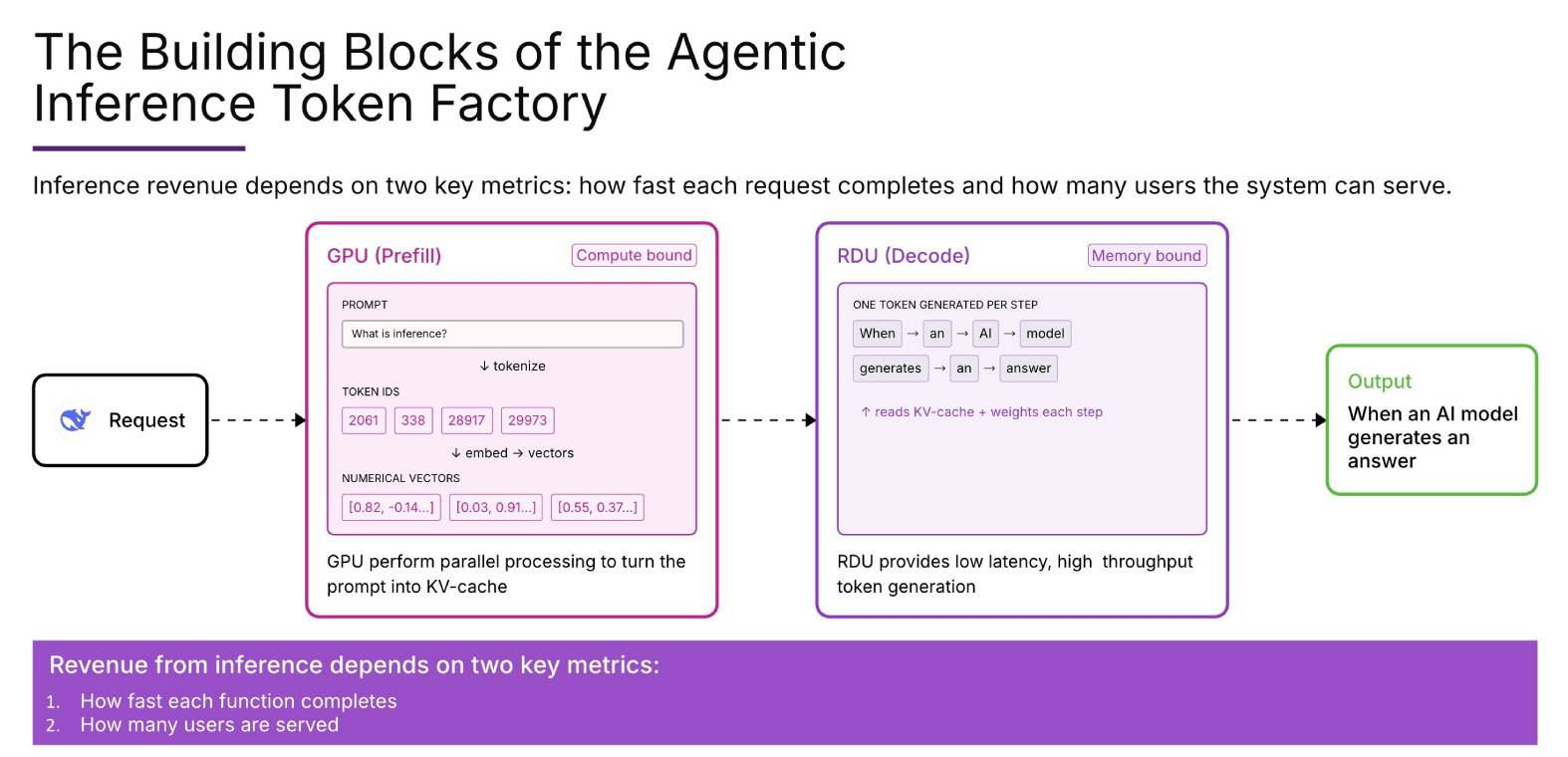
Think of AI inference as a factory. Prefill is where the raw materials enter, such as the user prompt, retrieved documents, code, conversation history, and other context. This stage is highly parallel and compute-intensive, making GPUs well-suited to rapidly process the input and prepare it for generation.
Decode is the production line that generates one response token at a time. If the production line slows, the entire factory backs up. High-performance decode ultimately depends on an architecture designed to efficiently move data at scale. This is where SambaNova's RDU architecture excels.
Built on the Dataflow Architecture, the SambaNova RDU delivers ultra-low-latency, high-throughput, and power‑efficient performance for AI inference workloads, fundamentally reshaping the economics of token generation.
KV Cache Transfer: Enabling Near-Zero Latency Handoff Between Phases
Separating prefill and decode is only practical if the transition between the workflows is fast.
During the prefill phase, the model generates a key-value (KV) cache, an internal memory structure that stores the processed prompt. During decoding, the RDUs simply reuse this cache to generate tokens.
SambaNova transfers the KV cache directly between hardware pools using high-speed interconnects and optimized networking for disaggregated inference. This handoff adds only minimal latency while eliminating redundant computation, allowing each accelerator to focus on the workload it performs most efficiently.
As context windows continue to grow, efficient KV cache management is becoming one of the most important optimizations in large-scale AI serving.
Request Orchestration: Routing, Scheduling, and Prompt Caching Across Pools
Disaggregated inference also requires an orchestration layer responsible for tasks like:
- Determining where each request should execute
- Balancing workloads across available hardware
- Scheduling requests to maximize throughput while maintaining low latency
It also manages prompt caching, allowing repeated prompts or shared context to be reused rather than processed from scratch.
For agentic AI, orchestration becomes even more important. Thousands of concurrent agents may generate highly variable workloads, invoke external tools, or issue follow-up requests in rapid succession. Intelligent scheduling ensures accelerator resources remain balanced while preventing bottlenecks from forming in either the prefill or decode pools.
What to Consider When Adopting a Disaggregated Inference Architecture
Enterprises evaluating disaggregated inference should look beyond benchmark performance and consider how well an architecture supports production-scale AI workloads.
Key considerations include:
- The ability to independently scale prefill and decode resources as model sizes, user demand, and AI agent populations continue to grow.
- High-speed KV cache transfer with minimal handoff latency.
- Intelligent workload routing and scheduling across hardware pools.
- Efficient support for long-context models and agentic AI workflows.
- High accelerator utilization without excessive overprovisioning.
Ultimately, the objective is a platform capable of delivering consistently low latency, high throughput, and efficient infrastructure utilization as AI adoption accelerates.
The Advantages of Disaggregated Inference
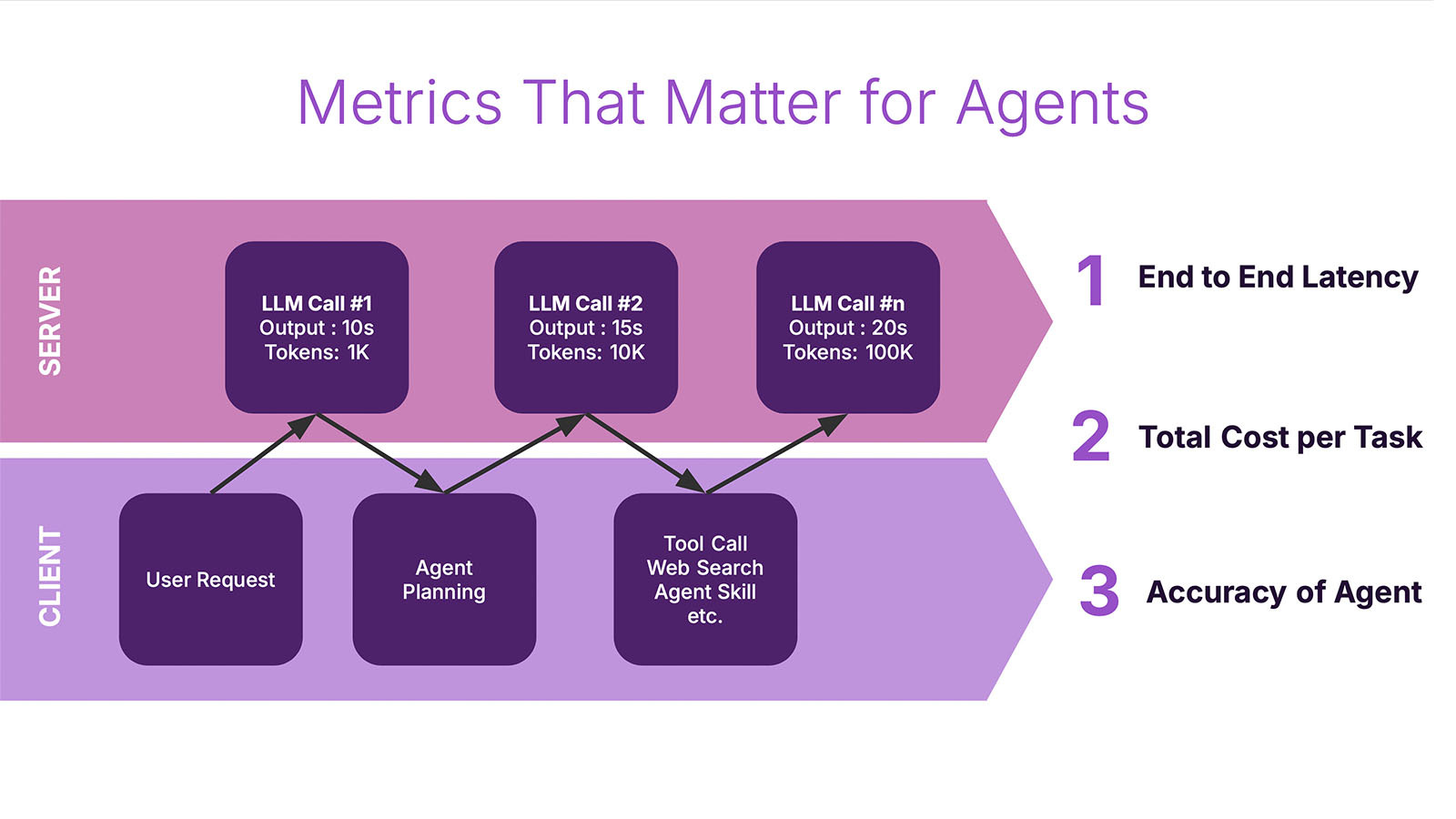
Disaggregated inference enables organizations to achieve optimized agent performance at lower cost.
Lower Time to First Token: Enabling Premium Inference Quality
The first impression of an AI application or agent is how quickly it begins responding. Time to First Token (TTFT) measures the delay between a user submitting a prompt and the model generating its first token. Lower TTFT creates a more responsive experience and is often associated with premium AI services.
Disaggregated inference reduces TTFT by allowing compute-optimized hardware, such as GPUs, to focus exclusively on the prefill phase. Rather than competing with ongoing decode workloads for accelerator resources, prompts are processed immediately, reducing queueing delays and accelerating response generation.
For conversational assistants, coding copilots, and AI agents that interact with users in real time, consistently low TTFT is critical to maintaining a seamless experience.
Fewer Idle Cycles: How Disaggregation Raises Utilization Across the Fleet
In a monolithic architecture, accelerators alternate between compute-intensive and memory-intensive workloads, leaving portions of the hardware underutilized at different stages of inference.
Disaggregated inference assigns each workload to specialized hardware, increasing overall Tokens per Second (TPS) across the infrastructure. Rather than adding more hardware to meet growing demand, organizations extract significantly more throughput from their existing AI infrastructure.
How Disaggregation Scales as Model Size and Request Volume Grow
Longer context windows, multi-step reasoning, and concurrent AI agents all increase the demand placed on both prefill and decode. In monolithic systems, these competing workloads quickly create bottlenecks that reduce throughput and increase latency.
However, with disaggregated inference, organizations can independently scale compute and decode capacity to match demand. Applications with long prompts or retrieval-heavy workflows can expand prefill resources, while deployments serving thousands of concurrent users or AI agents can increase decode capacity without unnecessarily adding compute infrastructure.
This flexible scaling improves Time per Output Token (TPOT) without sacrificing responsiveness or infrastructure efficiency.
See How SambaNova's Heterogeneous Architecture Delivers Disaggregated Inference
By combining GPUs for compute-intensive prefill with RDUs optimized for high-throughput decode, organizations can match each stage of inference to the processor best suited to execute it.
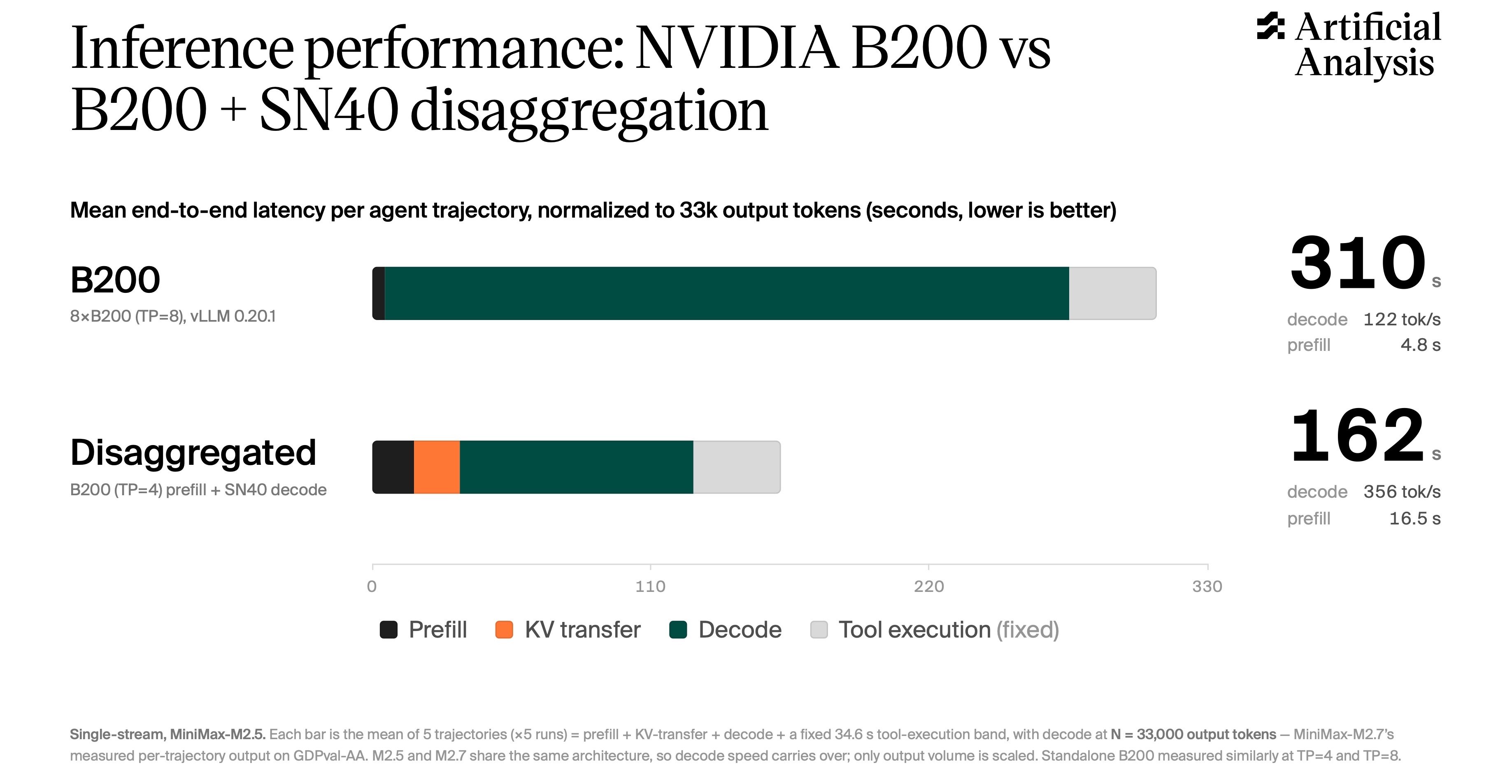
Independent verifier Artificial Analysis found that the configuration of NVIDIA B200 for prefill and SambaNova RDU chip SN40 for decode delivers 2x the inference speed of B200-only setups.
SambaNova's latest RDU, SN50, delivers 5X more compute and 4X more network bandwidth than SN40, resulting in 10x the throughput when combined with NVIDIA B300 GPUs for prefill.
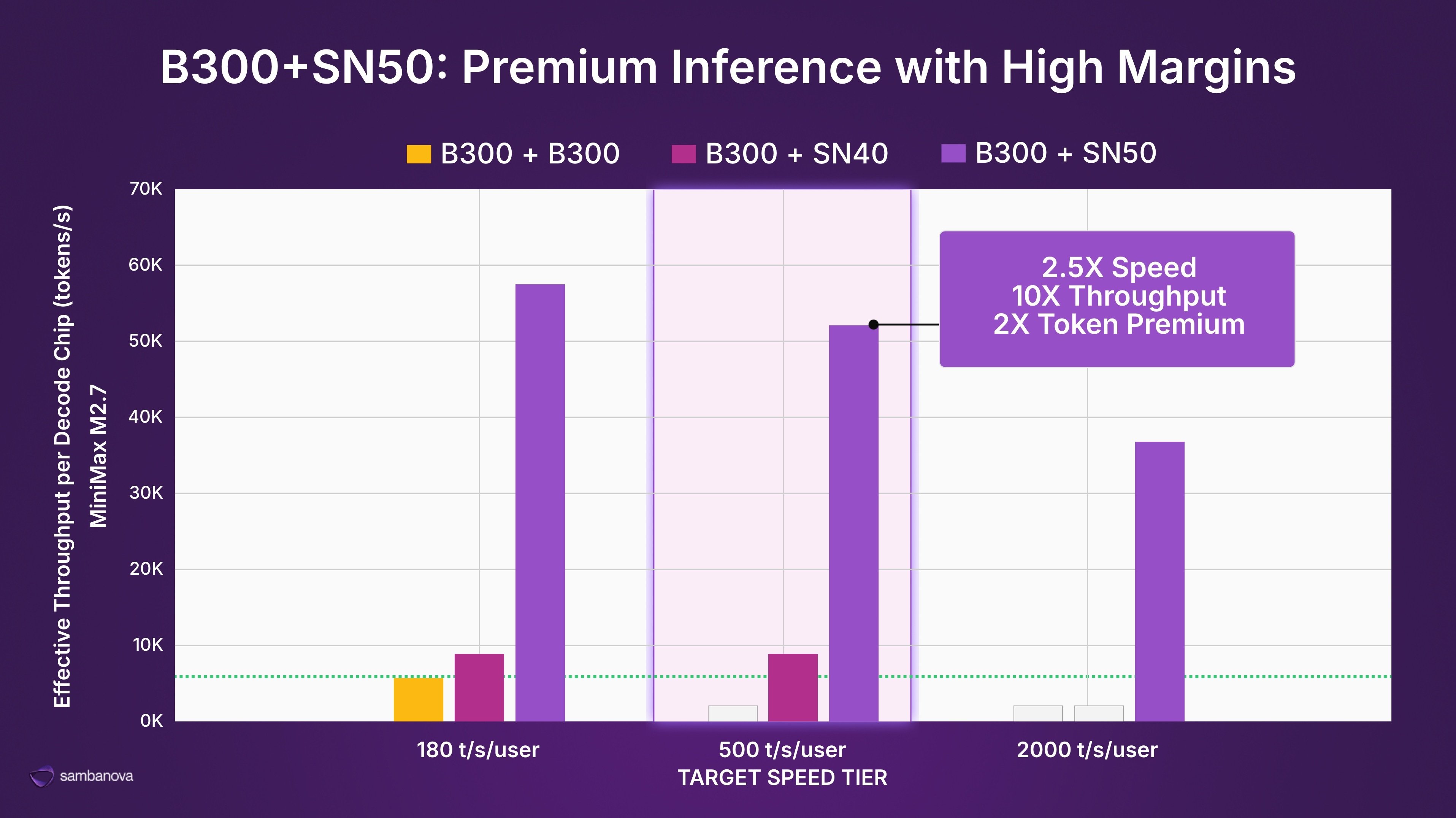
With SambaNova’s SambaStack, enterprises can fully configure the system to find the right balance for their AI agents and scale their solutions to production.
Try running open-source models like DeepSeek on SambaCloud for free to experience the speed of SambaNova RDUs today!